
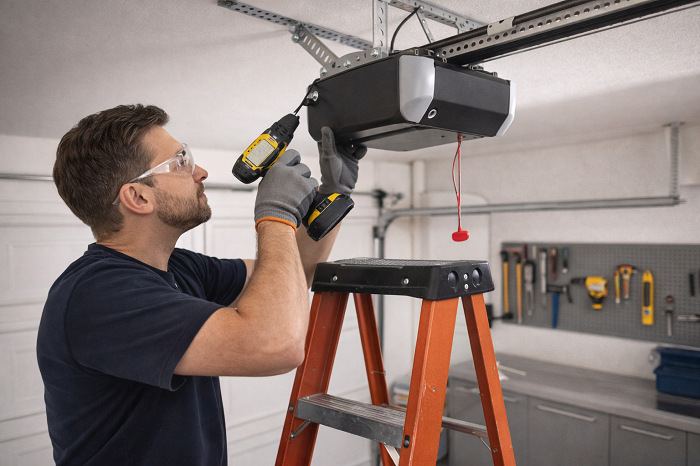
Save time, money, and stress by mastering the essentials of DIY garage door opener installation—while ensuring safety, reliable performance, and long-term peace of mind. These quick-scan highlights deliver practical steps and must-know advice from Cedar Park’s trusted garage door experts.
- DIY installation can cut costs by 20–30% compared to hiring a pro, with most first-timers finishing in 2–4 hours using clear instructions and a helper.
- Choosing the right opener type—chain, belt, screw, or direct drive—is crucial; match your door’s weight, your budget, and your noise preferences for optimal results.
- Always prioritize safety: Disconnect power at the circuit breaker, wear gloves and goggles, and enlist a helper for lifting or overhead work to prevent injury.
- Prep is your shortcut to success: Gather all tools, hardware, and safety gear before starting—double-check your kit and use a checklist to avoid mid-project delays.
- Follow the manufacturer’s step-by-step manual at each phase; precise assembly, level mounting, and proper sensor placement ensure quiet, reliable operation from day one.
- Test auto-reverse safety features after install: Verify that the door immediately reverses when blocked—this protects both your family and your investment.
- Smart upgrade options like myQ connectivity and backup batteries add value and security, letting you control and monitor your garage door via smartphone from anywhere.
- Call a trusted pro for electrical work, heavy doors, or complex layouts to guarantee code-compliant, safe, and seamless results—backed by transparent pricing and warranty.
With these pro tips, you’re ready to tackle your next garage door project confidently. For detailed walk-throughs and friendly, expert help at any step, check out the full guide or connect with Ahura Garage Doors—your experts always at your service.
Introduction
Few home projects offer more satisfaction—and savings—than installing your own garage door opener. Imagine pocketing an extra 20–30% of your budget just by rolling up your sleeves and getting it done yourself.
Now, picture this: It’s a Saturday in Cedar Park, the morning sun peeking through your garage windows as you transform a stubborn old door into a smooth, reliable entryway—all before lunchtime. That sense of accomplishment is real, and every time you press that button, you’ll know you did it right.
But let’s be honest—DIY only feels rewarding when you have clear steps, the right tools, and trustworthy guidance to keep everything simple and safe. One missing bolt or overlooked precaution can turn a money saver into a headache.
That’s where our expert walkthrough comes in. You’ll discover:
- How to select the perfect opener for your garage and lifestyle
- The step-by-step process Cedar Park homeowners trust for professional results
- Top safety practices that protect your hands, home, and investment
- Must-have tools and smart add-ons for a smoother, quieter experience
We’ll highlight what’s worth tackling on your own—and when it makes sense to call in a pro, so you never sacrifice safety for savings.
By following along, you’ll gain the confidence to take control of your home upgrade, the inside edge on local installation tips, and peace of mind knowing that expert support is always just a phone call away.
Ready to make the most of your DIY spirit—without the stress? The journey to a reliable, smooth-running garage door starts here, with everything you need to install like a pro and enjoy years of worry-free use.
Let’s break down exactly what’s involved, so you can decide how hands-on you want your next home improvement win to be.
Understanding DIY Garage Door Opener Installation
Thinking about installing your own garage door opener? You’re not alone—DIY garage door opener installation is a popular project among Cedar Park homeowners who want to save money and learn a valuable skill.
Doing it yourself can cut costs by 20–30% compared to professional installation, and most first-timers complete the project in just 2–4 hours with the right preparation.
What DIY Garage Door Opener Installation Involves
DIY installation means purchasing a compatible opener kit and handling every step—from assembling the opener and brackets to wiring controls and safety sensors.
Typical opener styles found in Cedar Park include:
- Chain drive: Sturdy, budget-friendly, a bit noisy—perfect for detached garages.
- Belt drive: Quieter and smoother, costs a bit more, great for garages under bedrooms.
- Screw drive: Fewer moving parts, less upkeep, best for moderate climates.
- Direct drive: Ultra-quiet, minimal vibration, higher-end option for a sleek finish.
Choose the right type based on your home’s needs and the door’s weight and construction.
When DIY Is Smart—And When to Call a Pro
Not every opener project is a fit for DIY, and that’s okay! If your door is unusually heavy, your garage ceiling is complex, or electrical wiring to the mains is needed, it’s smart (and safest) to call a pro.
You’re a great candidate for DIY if you:
- Are comfortable reading and following a step-by-step manual.
- Have basic mechanical skills—think using a drill, socket set, and level.
- Know how to work safely with ladders and tools.
Otherwise, hiring help is the best way to get reliable, code-compliant results—especially for homes with unique layouts or older, heavy doors.
Your Role—and Support Available
DIY doesn’t mean you’re on your own. You’re responsible for:
- Making time for safety checks and setup.
- Using proper personal protective equipment—like gloves, goggles, and a stable ladder.
- Double-checking the installation against the model manual and safety standards.
Picture this: You’re up on the ladder, the sun’s coming through your garage windows, and you’re almost done—just connect the sensors, test the auto-reverse, and the job is yours.
Ahura Garage Doors prioritizes your safety and satisfaction, even if you prefer self-install. Visit our Garage Door Opener Installation Guide 2025 for product comparisons, quick-support tips, and direct access to experts if you need guidance at any step.
Even when choosing DIY, you gain peace of mind knowing expert help is just a call away—your safety and satisfaction always come first.
Essential Safety Precautions for DIY Installers
Putting Safety First Is Non-Negotiable
At Ahura Garage Doors, your safety comes before everything else.
Every year, over 20,000 U.S. garage door injuries are reported—most from avoidable DIY mistakes. You’re working with heavy hardware and live electrical components. Take safety seriously from the moment you unpack your tools.
Before you lift a drill or climb a ladder, run through this essential pre-check:
- Disconnect power at the circuit breaker—never just at the opener’s plug.
- Open and close your garage door by hand. It must move smoothly, with no sticking or jerking.
- Clear the entire work area, including overhead, so there’s nothing to trip over or bump into.
“Picture this: A clean, silent workspace, sturdy ladder in place, helper by your side—because solo lifting a 40-lb. opener is asking for trouble.”
Always Use the Right Protective Gear
You wouldn’t change a tire barefoot—treat your home garage upgrade the same way.
Wear:
- Gloves to prevent pinched fingers and scrapes
- Goggles for eye protection (metal shavings, anyone?)
- Ear protection if using drills or impact drivers
If you ever need to connect to your home’s main power, it’s time to call an electrician. Cedar Park code—and your own peace of mind—demands it.
Safe Handling, Smart Lifting, Reliable Support
Garage doors and openers can be surprisingly heavy.
Always:
- Enlist a helper for any overhead work or when steadying the opener
- Double-check ladder footing (flat, stable, and non-slip)
- Use a stud finder to locate joists for secure mounting
Follow every manufacturer’s instruction manual like it’s a map to your family’s safety zone. Model-specific details aren’t suggestions—they’re lifelines.
Key Safety Steps by Phase
Here’s your must-scan table for step-by-step safety:
| Project Phase | Safety Step |
|————————————-|——————————————————|
| Prep | Power off, area clear, manual door check |
| Assembling Opener | Wear gloves/goggles, follow manual |
| Mounting Hardware | Use stable ladder, helper assists, pre-drill holes |
| Electrical | Call licensed electrician if wiring to mains |
| Sensor/Wire Setup | Route wires neatly, avoid pinch points |
| Final Testing | Use timber offcut to test auto-reverse, eye shield |
“Protect your hands, shield your eyes, and always double-check the power.”
Safety Is Your Shortcut to Success
The best installations are the safest—it’s that simple.
A little prep, the right gear, and never cutting corners with electricity or heavy lifting will set you up for a smooth, worry-free opener upgrade.
Whenever in doubt, remember: Ahura Garage Doors is here to answer any DIY safety question, big or small—and always with your peace of mind first.
Tools and Materials Checklist
Every successful garage door opener installation starts with having the right tools and materials ready before you dive in. Gathering everything up front means you’ll avoid extra trips to the hardware store—or worse, stopping mid-project.
Picture this: You’re halfway through your install and realize you’re missing a crucial bracket or your only screwdriver isn’t the right size. Avoid frustration by using this checklist tailored for Cedar Park homeowners.
Essential Tools for Sectional & Roller Door Installs
You’ll need more than a screwdriver—precision and safety come first.
- Power drill with assorted bits (5.5mm, 8mm nut driver for most kits)
- Socket set (8mm, 10mm, 13mm) and adjustable wrenches
- Screwdrivers (Phillips and slotted)
- Hammer and pencil for marking and gentle taps
- Stud finder for safe, secure mounting into the wall or ceiling
- Laser level for perfect alignment
- Measuring tape (accurate placement is a must)
- Ladder (rated for at least two people)
- Straps or bungee cords for stabilizing assemblies
- Timber offcut for testing auto-reverse function
- Wire stripper for clean, safe electrical connections
Safety Gear and Smart Add-Ons
Don’t overlook safety—one accident can halt your entire project.
- Gloves for grip and protection
- Safety goggles to shield eyes from dust and debris
- Ear protection when using power tools
Upgrade with peace of mind:
- Optional smart home kits (like myQ for wireless access and security upgrades)
Materials: What Your Opener Kit Includes (and Doesn’t)
A standard garage door opener kit should have these core components:
- Motor/powerhead and drive rail (chain, belt, or screw)
- Hardware pack: brackets, bolts, and mounting straps
- Wall-mounted controls and safety reversing sensors
- Wireless remote controls or keypads
- Manual release rope
- Brand-specific door brackets (double-check for sectional or roller doors)
- Instruction manual for your opener model (Chamberlain, Liftmaster, Genie, etc.)
Pro Tip: Double-check your box as soon as you open it: use the parts list in the manual to confirm all pieces are there. Missing a tiny bolt? Most local hardware stores in Cedar Park carry replacements—just bring your opener’s brand and model number.
Sourcing Extra Parts Locally
Don’t wait days for shipping if you run short on small parts.
- Try Cedar Park home improvement stores like Home Depot or Ace Hardware for extra screws, replacement sensors, or Allen keys.
- If you’re installing a smart system, check for myQ units in stock to avoid online backorders.
Remember: “A prepared installer finishes faster—with fewer headaches.” Double-check your checklist, and you’ll upgrade your garage like a pro. The right prep sets you up for a smooth, stress-free experience that feels just as good as the final result.

Step-by-Step Installation Process for Sectional Garage Doors
Assemble Rail and Power Unit
Start by unpacking your garage door opener kit and double-checking all parts match your specific model (Chamberlain, LiftMaster, etc.).
Follow the manufacturer’s manual carefully to:
- Assemble the rail tube and carriage
- Attach the carriage (the moving arm) to the rail
- Connect the rail to the power unit (motor housing)
- Ensure the carriage slides smoothly before continuing
Pro tip: Lay everything out on a drop cloth to keep track and stay organized.
“The first 30 minutes you spend checking parts and layout saves you countless headaches later.”
Mark and Install Header Bracket
Manually open the garage door fully.
- Use a measuring tape to mark the door’s highest point, then measure and mark 2 inches above for the header bracket
- Center the mark over the door
- Use a stud finder to ensure you’re attaching to solid wood, not drywall
- Pre-drill pilot holes for lag screws (this prevents splitting)
Pro photo moment: Accurately marking and drilling the header bracket above the garage for a clean, sturdy install.
Attach Rail and Support the Assembly
Connect the rail’s free end to the header bracket using the included clevis pin or bolt.
- Rest the power unit (motor) on a ladder to keep the assembly level
- Check with a laser level or spirit level for accuracy
- This is a great time to have a helper for extra support
Proper support now means smoother, safer operation later.
Mount Opener to Ceiling
Locate a ceiling joist with your stud finder.
- Attach angle irons or mounting straps to the joist using lag screws
- Secure the opener motor to the mounting straps
- Position the power unit so it has a clear line to a nearby outlet (do not use an extension cord for permanent installations)
Picture this: Steady hands and a helper lifting the opener safely—teamwork keeps things sturdy and stress-free.
Install Door Bracket and Connect Carriage Arm
- Center the door bracket on the top section of your garage door
- Attach with included bolts or lag screws
- Connect the straight or curved arm from the carriage to the door bracket using the designated safety pin/bolt
- Double-check for smooth movement—alignment is everything for quiet, reliable operation
Install Safety Reversing Sensors
Safety beams are crucial and required by code.
- Mount the sensors 6 inches above the floor, facing each other on either side of the door
- Run wires neatly along the wall and ceiling to the motor
- Connect “red to red” and “white to white” as shown in your manual
- Test the sensors: the opener should not close if the beam is interrupted
Install Wall Control Panel
- Choose a wall spot about 4-5 feet high, near your entry
- Mount the panel, then run wires tidily to the power unit
- Secure wires with clips or staples for a professional look
Program, Test, and Final Adjustments
- Restore power
- Program up/down travel limits and closing force per the manual
- Test the auto-reverse: Place a timber offcut under the closing door— it must reverse immediately on contact
- Hang and label the manual release rope (should be easily reachable)
Troubleshooting tips:
- If the door binds or the motor strains, check spring tension and door balance
- For issues like a non-responsive remote or misaligned sensors, double-check all wiring connections and sensor alignment
“Smoother, quieter, and safer—every step you take right pays off every single day you use your garage door.”
With each stage complete, you’re not just checking boxes—you’re creating true, everyday peace of mind. Careful setup today means fewer worries later, and if anything looks off, Ahura Garage Doors is always at your service.
Special Considerations for Roller Garage Door Openers
Roller garage doors work differently from sectional doors—so installation steps change significantly.
If your home in Cedar Park uses a roller door, take note of several key differences to ensure both safety and reliable performance.
Key Differences from Sectional Door Installation
Compared to sectional doors, roller models require:
- Mounting the opener motor over the door’s axle or drum
- Disabling existing locks to prevent accidental engagement
- Fitting a stop collar on the axle (opposite the motor side) to limit movement
- Installing a weight bar at the door base for stable movement
- Adding a manual release rope for emergency access
Each step is crucial for smooth, quiet operation and safety compliance.
Added Components and Secure Procedures
You’ll need a few extra tasks during installation:
- Secure door in open position using a clamp or vice-grips on the track—this is critical to prevent accidental movement.
- Disable or remove manual locks before operating the opener, reducing the risk of motor or door damage.
- Mount the opener’s drive unit over the axle, ensuring it aligns perfectly with the drum and has a solid bracket connection.
Picture this: You and a helper holding the heavy motor assembly steady on a ladder as you carefully bolt it above the door—teamwork and stability are everything.
Safety Beams and Limit Adjustments
Just like with sectional doors, you need to:
- Install safety reversing sensors (beams) at the correct height, usually 6 inches from the ground, to prevent accidents.
- Carefully program the open/close limits and test the door’s auto-reverse feature with a timber offcut.
- Double-check wire routing and clear sensor alignment—missteps can cause constant “door won’t close” errors.
Side-by-Side: Major Roller vs. Sectional Installation Steps
| Step/Component | Sectional Door | Roller Door |
|—————————|—————————————-|———————————————|
| Opener Mount Location | Ceiling (center of garage) | Above axle/drum (door end) |
| Required Add-ons | Standard brackets, arms | Stop collar, weight bar, manual release rope |
| Lock Handling | N/A | Must disable/remove door locks |
| Door Position for Safety | Closed during most install steps | Secure in full open position |
| Sensor Setup | At track base, both sides | At base, aligned with door axis |
If you want your roller opener to last and stay safe, following these specialized steps is non-negotiable.
Choosing the right approach not only keeps your family safe but also prevents costly mistakes down the road.
A smooth roller door installation delivers quiet performance, smart features, and peace of mind—your Cedar Park neighbors will notice the difference.
Post-Installation Tips and Troubleshooting
Start With Your First Operation: Key Initial Checks
After finishing your DIY install, the first test is crucial. Open and close your garage door a few times by hand before engaging the opener—ensure the motion is smooth and there’s no sticking or scraping.
A door that’s out of balance or binds can instantly put strain on your new motor. If you notice jerky movement or the door won’t stay halfway open on its own, you’ll need to adjust the spring tension or call a garage door professional.
Here’s a quick post-installation checklist:
- Check door balance: Door should stay halfway open unaided.
- Smooth travel: No dragging or sudden stops.
- Motor strain: Listen—motors should run quietly. If you hear grinding or laboring, stop and inspect.
“It’s much easier to correct balance issues right away than to troubleshoot opener problems down the line.”
Opener Not Working? 1-Minute Troubleshooting Guide
If your opener doesn’t operate as expected, don’t panic. Start with the basics:
- Confirm the opener is plugged in and breaker is on.
- Check the wall button and remote for battery issues.
- Realign safety sensors—make sure their LED lights are solid, not blinking. Sensors that are out of line will stop your door from closing and are a top cause of user frustration in Cedar Park.
- Inspect all wiring connections—look for any loose terminals at the motor or sensor ends.
- Test remotes and keypads; reprogram if needed.
If you hear beeping or see blinking lights, consult your manual for code specifics.
Smart Home Setup & When to Call for Help
Ready for smart control? Most new openers (like Chamberlain with myQ) let you sync to mobile apps. Just:
- Download the brand’s app.
- Scan or enter your opener’s unique code.
- Follow in-app prompts for Wi-Fi setup.
If your Wi-Fi is weak in the garage, consider a range extender for smooth connection.
Electrical problems or advanced mechanical issues—like springs, cables, or significant alignment corrections—are best left to professionals for safety and warranty reasons.
Maintenance Musts and Easy Peace of Mind
To keep your system running smoothly:
- Test auto-reverse monthly using a 2×4 or timber offcut.
- Wipe sensors and tracks clean.
- Inspect hardware and tighten as needed.
- Lubricate moving parts with garage door–safe lubricant.
- Update app and firmware per manufacturer’s schedule.
“Regular checks make your garage door opener last longer and keep your home secure.”
Ahura Garage Doors offers expert, ongoing support—even if you’ve done the install yourself. Whenever you hit a snag, reach out for troubleshooting help or friendly advice.
A smooth-running garage door opener hinges on small, regular actions now—so you can count on reliability and safety for years to come.
Recommended Upgrades and Smart Features
Upgrade your garage door opener and unlock next-level security, convenience, and peace of mind—right from your smartphone or keypad.
Modern add-ons not only boost daily comfort but can also raise your home’s value up to 4%.
Top Smart Features and Upgrades for Your Garage Opener
Picture this: your hands are full with groceries, but a tap on your phone opens the garage before you even pull in. Today’s most-requested upgrades include:
- Wireless security keypads for keyless entry and temporary access codes
- Smartphone control and myQ connectivity kits—get alerts, monitor activity, and control your door from anywhere
- Backup batteries to keep your opener running during power outages
- Quiet/belt drive systems for ultra-smooth, near-silent operation (ideal for attached garages)
- Motion-sensing lights that illuminate the garage automatically when activity is detected
When Cedar Park homeowners add these features, they combine security, comfort, and real-time peace of mind.
How to Retrofit Smart Control and Safety Features
Most leading openers (like Chamberlain or Liftmaster) let you add smart control, often in under an hour. Here’s what you need:
- Plug-and-play connectivity kits: Add Wi-Fi and app compatibility to your existing opener
- Download and pair the myQ app (or your opener brand’s app) for full-featured remote access
- Add or upgrade wireless sensors for enhanced safety and remote diagnostics
For older models, upgrading to a newer, belt drive opener ensures full compatibility and lowers yearly maintenance costs by up to 20%.
Why Cedar Park Homeowners Upgrade—And What It Means for You
Smart features are more than trend—they’re becoming standard for homes across Cedar Park.
Two out of three homeowners now expect keyless or app-based garage access, and demand for quiet operation has doubled in the past five years.
Imagine your garage lights snapping on as you arrive, safe in the knowledge your family and belongings are protected—every single day.
Add-on upgrades transform your garage door into a true modern entryway—boosting security, functionality, and long-term satisfaction with every click or swipe.
When to Consider Professional Assistance
Installing a garage door opener yourself is rewarding, but some projects demand expert hands for safety and peace of mind.
You’ll want to reach out to a pro when you encounter any of these common hurdles:
- Structural issues, like uncertain wall framing or tricky ceiling joists
- Major electrical work or anything needing code-compliant wiring—especially when connecting directly to your home’s mains
- Older, oversized, or heavy garage doors, including wooden and custom designs
- Visible rusty, worn, or high-tension springs, which can be dangerous without the right tools
- If handling power tools, heavy parts, or ladders feels outside your comfort zone
If you’re not 100% confident, there’s no substitute for professional expertise.
“Think of it this way: A job done right is safer, lasts longer, and saves headaches in the long run.”
What You Get With a Pro Install
Choosing Ahura Garage Doors means choosing a seamless, worry-free process:
- Warranty protection on parts and workmanship
- Professional setup, calibration, and programming so every feature runs perfectly
- Thorough safety checks to prevent issues before they start
- Complete cleanup, so you return to a tidy space—no leftover packaging or hardware
- Upfront, transparent pricing—no hidden surprises
Expect your install to be completed in 2-4 hours by a skilled team, matching DIY timelines but with added assurance.
Visualize the Difference
Picture this: Instead of fidgeting with unfamiliar instructions or worrying about whether your sensors are aligned, you simply open your garage at the push of a button—confident it’s safe, secure, and built to last.
It’s about peace of mind: Knowing your investment is protected by Cedar Park’s trusted garage door experts.
A professional install is ideal for trickier jobs, older homes, or anyone who wants fast, flawless results. You’ll enjoy:
- Personal walkthroughs of all controls and safety features
- Reliable follow-up for questions or adjustments
- A confident sense that “everything was done right”
That’s the Ahura promise—expert advice, genuine care, and your satisfaction every step of the way. If there’s any question about safety, complexity, or simply wanting it perfect, expert help is just a call away.
Frequently Asked Questions About DIY Garage Door Opener Installation
Wondering if you can handle a DIY garage door opener install in Cedar Park, TX? You’re not alone. Here are the top questions our clients ask before they break out their toolbox.
How Long Will My Installation Actually Take?
Most first-time DIYers can expect the process to take 2-4 hours with a helper.
Plan for extra time if you’re unfamiliar with tools or working alone—patience pays off here! “A Saturday afternoon is all you need to bring a little smart home magic to your garage.”
When Should I Call a Pro Instead of Going DIY?
Some doors just aren’t DIY-friendly.
- Non-standard or heavy doors: Need special handling and possibly custom parts.
- Complicated wiring or no nearby power outlets: These jobs often require a licensed electrician for safety.
- Older door hardware (pre-1993), broken springs, or visible damage: Definitely call Ahura Garage Doors—your peace of mind matters.
If you’re wondering, ‘Is this a job for a professional?’—it probably is.
What Regular Maintenance Does My Opener Need?
Simple, quick checks keep your opener running for years:
- Test auto-reverse safety: Place a 2×4 or timber offcut under the door monthly.
- Lubricate metal parts: Use a non-silicone spray 2-3 times a year.
- Check sensor alignment and clear lens of dust.
Keeping up with these tasks helps prevent breakdowns and costly repairs.
How Do I Test Safety Features?
Every opener should reverse direction when the beam is interrupted or if it hits an object.
- Place a small block under the closing door. Opener should stop and reverse.
- Wave something between the reversing sensors—door shouldn’t close.
“Your garage door is the largest moving part in your home—test its safety just like you test a smoke detector.”
Are Remotes and Smart Home Features Compatible?
Most modern openers (Chamberlain, Liftmaster, Genie) work with universal remotes and myQ or similar smart kits.
- Check your manual or look for compatibility logos on your opener.
- Pairing new remotes or apps usually means pressing a ‘learn’ button and following prompts.
If you’re upgrading, ask our team about smart features that make your routine even easier.
Need Answers or Support? We’re Here
Have a tricky install or run into a glitch? Ahura Garage Doors puts customer-first support at the core of our brand.
Call, click, or swing by our Cedar Park office—we’re always ready with friendly, expert help, whether your question is big or small.
DIYers call it confidence. We call it service you can count on, every step of the way.
If you prefer professional help, explore our garage door opener installation services for safe, code-compliant results backed by warranty.
Conclusion
Tackling your own garage door opener installation isn’t just about saving money—it’s about building confidence in the care and security of your home. With the right guidance and a step-by-step approach, you’ve got the power to upgrade your space safely and efficiently, all while knowing professional backup is always nearby if you want it.
You now have the framework to transform your Cedar Park garage—your comfort and safety come first, every step of the way. Keep these actionable insights top of mind:
- Prioritize safety: Use personal protective gear and always follow manufacturer guidelines.
- Double-check your prep: Lay out all tools and parts before you start to prevent mid-project stress.
- Test everything as you go: Confirm door balance, sensor alignment, and auto-reverse functionality.
- Upgrade for convenience and security: Consider smart features for modern access and added peace of mind.
- Ask for help when needed: If any part of the project feels out of your skill set, a quick call to a professional protects your investment and family.
Ready to put your plan into action?
- Review your tools and materials checklist today and gather all your supplies.
- Identify the right opener for your garage—sectional or roller—before purchasing.
- Share your DIY progress or questions with the Ahura Garage Doors team for instant support.
Now is the moment to turn your garage into a space that works as hard as you do—safer, smarter, and tailored to your family’s needs.
Every step you take is a stride toward greater home control and peace of mind. If you ever need support or want a professional finish, Ahura Garage Doors is always at your service—because your home deserves nothing less.
“A safer, smarter garage starts with one confident step—let today be the first.”
FAQ
Is DIY garage door opener installation safe?
Yes, DIY garage door opener installation is safe when manufacturer instructions are followed, safety gear is used, and electrical work is limited to plug-in connections.
How long does DIY garage door opener installation take?
Most homeowners complete DIY garage door opener installation in 2–4 hours with a helper and proper tools.
What tools are needed for DIY garage door opener installation?
Common tools include a drill, socket set, ladder, level, safety goggles, gloves, and a stud finder.
Garage Doors
Ahura brothers services LLC
Your Trusted Garage Door Experts in Austin Texas
